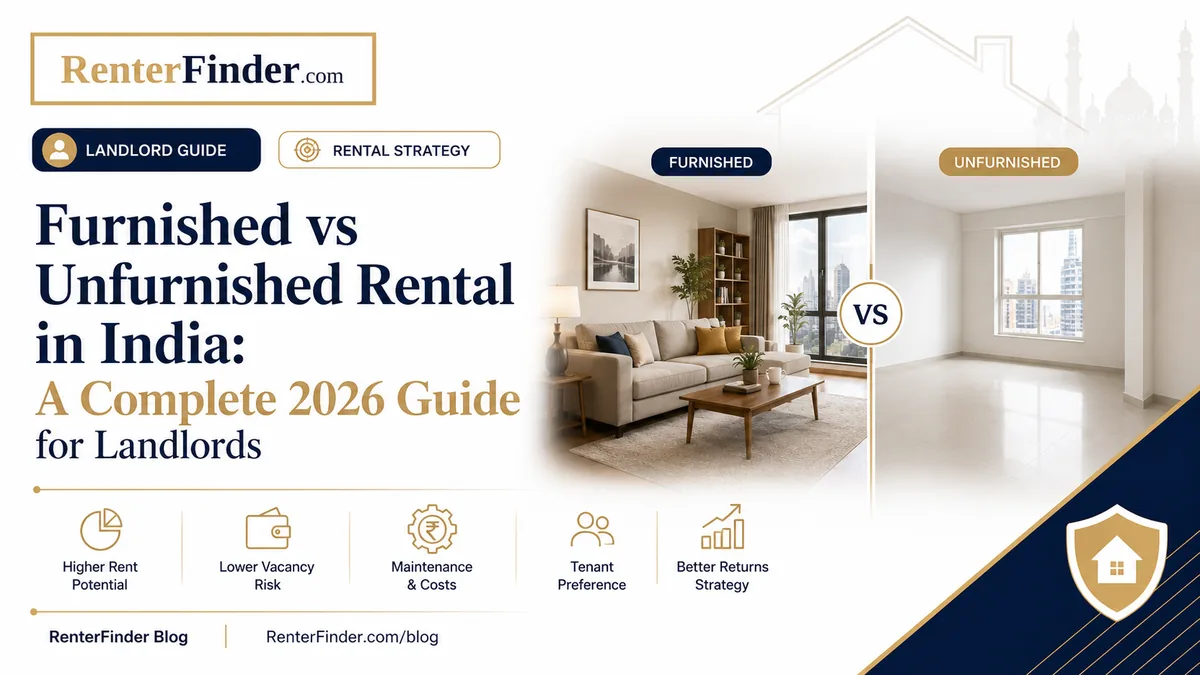
Every landlord in India eventually faces this question. You have a flat to rent out. It is empty. Do you spend money furnishing it - bed, sofa, dining table, maybe a refrigerator and washing machine - and then charge a premium rent? Or do you hand over the keys as-is and let the tenant handle their own belongings?
In 2026, with residential rents rising at roughly 5-8 percent annually in most major Indian cities (and faster in some infrastructure-driven pockets), the financial stakes of this decision are higher than they used to be. A miscalculated furnishing strategy can erode net returns. A smart one can make your property significantly easier to rent out.
This guide walks through both options honestly - the rental premium you can realistically expect, the upfront and ongoing costs each path involves, the types of tenants each attracts, and a practical decision framework to help you choose the right strategy for your specific property.
What "furnished" and "unfurnished" actually mean in India
The first problem with this debate is that both terms mean different things to different landlords and tenants. There is no legal definition of "fully furnished" in Indian tenancy law. What one landlord calls fully furnished - a sofa, one bed, a dining table, kitchen shelves, and a geyser - another might call semi-furnished. This ambiguity is the source of more move-in disappointments and deposit disputes than almost anything else.
For the purposes of this guide, here is a working definition of each category as commonly understood in the Indian rental market:
- Unfurnished: Bare flat with walls, flooring, kitchen slab/tiles, and bathroom fittings. No wardrobe, no furniture, no appliances. The tenant brings everything.
- Semi-furnished: Fixed fittings are in place - wardrobes, light fixtures, fans, curtain rods, modular kitchen (without appliances), geyser. The tenant brings furniture and large appliances (fridge, washing machine, AC).
- Fully furnished: Everything above, plus bed with mattress, sofa/seating, dining table and chairs, refrigerator, washing machine, and usually one or more ACs. Some landlords also include a television and microwave.
The financial case for furnishing your rental
The main argument for going furnished is a higher monthly rent. In most Indian metros and Tier 1 cities, a fully furnished flat typically rents for a meaningfully higher amount than an equivalent unfurnished flat - the exact premium varies by locality, city, and the quality of what is included. Furnished flats in high-demand localities tend to attract faster enquiries and shorter vacancy periods, especially when targeting working professionals or corporate transferees.
There are a few other real advantages. Furnished flats are significantly easier to rent out to short-stay or relocation tenants who cannot move large furniture across cities. A corporate employee transferred to Bangalore for 18 months does not want the hassle of buying a sofa, finding a storage solution, and then selling everything before moving back. For that tenant profile, a furnished flat at a premium is the most convenient option - and they are typically willing to pay for that convenience.
The tradeoff comes in upfront investment and ongoing costs. A genuine full furnishing - quality bed and mattress, sofa, dining table, refrigerator, washing machine, ACs - can run into several lakhs for a 2BHK. Budget for replacement cycles too: appliances break, sofas wear out, mattresses need replacing every few years. You are not just buying furniture once; you are committing to a maintenance cost that continues across every tenancy.
The financial case for keeping your rental unfurnished
The case for going unfurnished is simpler and often underrated. You have zero upfront furnishing cost. You have zero ongoing appliance maintenance cost. You have zero move-out dispute over the condition of the sofa or whether the washing machine drum vibration was normal wear and tear. You hand over a clean, empty flat and your financial exposure ends there.
Unfurnished flats also attract a very different - and often more stable - tenant profile. Families who are planning to stay for two or three years (or longer) almost always prefer unfurnished flats. They have their own furniture, their preferred mattress, the washing machine they bought last year. They do not want to pay a premium for furniture they do not need. These tenants are typically lower-turnover, more invested in maintaining the flat, and less likely to leave after 11 months when the first lease expires.
The lower headline rent is offset by lower vacancy rates (families tend to give proper notice and stay longer), lower replacement costs (no appliances to repair), and lower friction at move-out (nothing to inspect, no inventory to check against). For landlords who want predictable, low-hassle rental income over a long period, unfurnished is often the smarter choice even if the monthly rent number looks less impressive.
Which tenant type does each option attract?
Understanding who rents furnished versus unfurnished flats helps landlords make a better strategic choice - because the right tenant profile depends on your property's location and the kind of tenancy relationship you want.
Furnished flats tend to attract:
- Young professionals in their first independent rental, who have not yet accumulated furniture
- Employees on corporate transfer or project-based relocation (6 months to 2 years)
- Students and recent graduates moving for a first job
- Couples setting up together for the first time
- Individuals who move frequently and prefer flexibility over investment
Unfurnished flats tend to attract:
- Established families who already own furniture and appliances
- Renters planning a longer stay (2 years or more)
- Tenants who are particular about their own mattress, sofa, or appliance brands
- People who have rented before and know their own requirements well
- Tenants who want a lower monthly outflow and are willing to invest in their own belongings
Neither profile is inherently better. A young professional on a corporate transfer may be an excellent tenant who pays on time and causes no trouble - even if they stay only 18 months. A family that stays five years but has children who scuff every wall is not automatically the better outcome. Match your furnishing strategy to the tenant type your locality naturally attracts, not to a theoretical ideal.
Maintenance, wear and tear, and what landlords often underestimate
The biggest hidden cost in furnished rentals is not the original purchase. It is the ongoing maintenance that most first-time furnished landlords do not budget for. Air conditioner gas refills and annual servicing. Refrigerator compressor failure at year four. Washing machine drum bearing gone after three years of heavy use. Sofa fabric worn through after two tenancies. Mattress that needs replacing. These costs add up quietly and steadily.
The Model Tenancy Act 2021 (for states that have adopted it) draws a distinction between fair wear and tear - which is not chargeable to the tenant - and actual damage, which can be deducted from the security deposit. But applying that distinction in practice is often contentious. A washing machine that stops working after 18 months - is that wear and tear, or a usage problem? The only way to have a productive conversation about this at move-out is to have a signed move-in inventory with photos of every item, attached to the rent agreement. See the RenterFinder guide on what fully furnished actually includes in India for a room-by-room inventory checklist you can adapt.
For unfurnished landlords, maintenance is simpler. You are responsible for the structure, plumbing, and electrical systems. The tenant is responsible for their own belongings. End-of-tenancy disputes are mostly about painting, cleaning, and any structural damage - a much more manageable scope than furniture and appliances. For a landlord who does not want to field calls about a broken washing machine mid-tenancy, unfurnished removes an entire category of problem.
Semi-furnished: the middle path that often works best
For many landlords, the right answer is neither extreme. Semi-furnished - fixed fittings fully installed, furniture and appliances left to the tenant - offers a practical middle ground that works well across a wide range of tenant types.
A well-executed semi-furnished flat includes: wardrobes in all bedrooms, a modular kitchen with quality counters and storage, ceiling fans in every room, a geyser in each bathroom, a good quality shower setup, light fixtures throughout, and curtain rods. These are all fixed to the walls and are not easily removed. They add genuine value to the tenant without creating ongoing maintenance liability for you.
The tenant brings their own furniture and appliances. This means they are responsible for the sofa, bed, fridge, and washing machine - and any servicing those require. You are responsible for the structure and fixed fittings. This is a clean separation of responsibilities that most experienced landlords eventually arrive at.
Semi-furnished flats in good condition with quality wardrobes and modular kitchen typically rent faster than bare unfurnished flats, while avoiding the maintenance headaches of full furnishing. They also attract a broader range of tenants: families who have their own furniture, young professionals who are accumulating belongings, and couples who prefer their own appliances but appreciate not having to install fittings themselves.
A practical decision framework: how to choose for your property
Run through these four questions before deciding:
- Who lives in this locality? IT corridor near a tech park, with lots of young professionals on transfers? Furnished or semi-furnished works well. Family residential neighborhood with established schools? Unfurnished or semi-furnished is more appropriate - families have their own things.
- How long do you want each tenancy to be? If you want long, stable tenancies of 2-3 years or more, unfurnished or semi-furnished with fair rent will get you there. If you are comfortable with faster turnover and want to price accordingly, furnished opens that door.
- Can you absorb appliance repair costs and manage move-out inventory disputes? If you are a hands-on landlord comfortable dealing with these situations, full furnishing is a real option. If you want minimal post-move-out friction, keep it semi-furnished at most.
- What is your competition doing? Look at comparable flats in your locality on any rental platform. If your building already has several furnished flats at similar rent, you are competing in a crowded segment. If there are no well-equipped semi-furnished options, you can stand out without the full furnishing cost.
Finding the right tenant for your furnishing strategy
Once you have decided on your furnishing approach, finding a tenant whose requirements actually match your flat is the next critical step. A furnished flat listed generically on a portal will attract every kind of enquiry - including families who want to bring their own furniture and will balk at paying your furnished premium. This misalignment wastes everyone's time.
A better approach is to reach out to renters who have already stated their requirements in detail. On RenterFinder's Prospective Renters' List, each renter profile includes the type of flat they need, their budget, their occupation, family size, preferred locality, and move-in timeline. If a renter's profile says "furnished preferred" or "2BHK, willing to pay premium for furnished flat" - that is a direct match for your property. You do not have to explain why the rent is higher; they already know.
For landlords who have worked hard to furnish a flat well and want to attract tenants who will value and respect that furnishing, matching with the right renter upfront is the difference between a smooth tenancy and a frustrating one. The RenterFinder guide to finding a good tenant without a broker covers the screening checklist in detail.
RenterFinder launched on April 24, 2026, so the renter and landlord pool is still growing - please be patient with us as more users join. The platform charges a ₹125 listing fee per party for a three-month listing, with a Platform Service Fee split in two stages, only triggered after both parties agree to meet. There is no broker commission, no hidden fee, and no fee for browsing or initial contact.
Disclaimer: This guide covers general principles of furnished and unfurnished rental strategies in India. It does not constitute financial or legal advice. Rules around security deposit caps, fair wear and tear, and deductions vary by state and are subject to change. For current rules, see the Model Tenancy Act 2021 or your state's official portal.
Written by the RenterFinder Editorial Team. RenterFinder.com is India's rental-only matching platform. We just launched on April 24, 2026, and the renter and landlord pool is still growing - please be patient with us as more users join.
Related Articles
- What 'Fully Furnished' Actually Means in Indian Rental Flats - The renter-side perspective with a room-by-room checklist
- How to Find a Good Tenant in India Without a Broker - Screening checklist and the Prospective Renters' List walkthrough
- Hidden Charges in Indian Rental Agreements - What to include and negotiate in your agreement annexure
Browse the Prospective Renters' List and connect directly with renters whose requirements match your furnished or unfurnished flat. No broker. No commission.